I am reaching out to you today because a few clients recently asked me if IBM’s sharp decline over the last two days (falling -36%) was going to hurt their Schwab portfolios. It is a great question, and the short answer is: No, your portfolio is well-protected. To…
Examining the cause and effect of the new tariffs between the U.S. and China
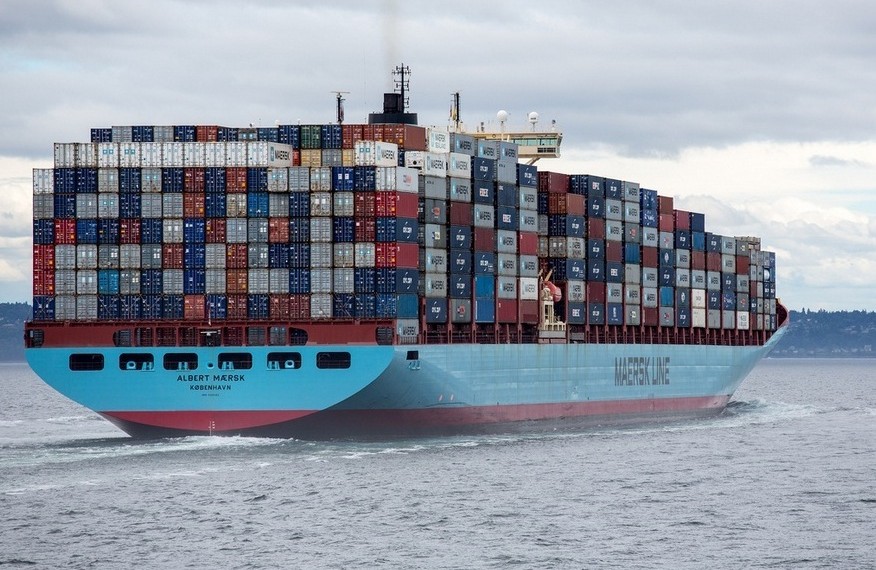
After months of relative quiet, the trade war between the U.S. and China has erupted again in a big way. The markets are the most immediate casualty, with the Dow plunging over 600 points on Monday alone.1
In all likelihood, you’re probably more focused on things like spring cleaning, your upcoming summer plans, and the end of Game of Thrones. My job in this letter is to briefly explain what’s going on, what matters, what doesn’t, and why you can go back to focusing on those other things
So, here’s what’s going on:
Failed deals lead to new tariffs
You may have noticed that headlines about the trade war had been rather muted in 2019. That’s because negotiators for both nations had been quietly working behind the scenes to come to an agreement on how to address the $375 billion trade deficit the U.S. has with China. The White House expressed optimism that a deal was close – until a sudden hardening of positions prompted both sides to retreat to their corners.
On Friday, May 10, President Trump raised the stakes by placing 25% tariffs on all Chinese imports that had previously been spared. Here’s how the U.S. trade representative put it:
“[The President has]…ordered us to begin the process of raising tariffs on essentially all remaining imports from China, which are valued at approximately $300 billion.”2
Throughout this trade war, it has seemed like both countries are waiting for the other to blink first. Both are still waiting. For on Monday, May 13, China announced it would raise tariffs on $60 billion in U.S. goods, some up to as much as 25%.3
Why all this matters to the markets
You’ve heard, of course, of the principle of cause and effect. If one thing happens, something else is affected. Fail to brush your teeth and you get cavities. Leave meat out of the refrigerator too long and it will spoil. You get the idea.
Investors, analysts, money managers, and traders who participate in the markets on a daily basis make decisions based on cause and effect. How tariffs impact certain companies is a perfect example of this. For instance, imagine a fictional American company called Widgets n’ Stuff, or WNS for short. In order to make its widgets, WNS buys thingamajigs from China. But thanks to tariffs, the price of importing thingamajigs goes up.
Investors know this, and thanks to the principle of cause and effect, predict it will have a negative impact on WNS’s finances. Maybe they’ll have to raise prices on their own widgets to make up the difference. Maybe they’ll have to produce fewer widgets. You get the idea. So, investors sell stock in Widgets n’ Stuff because it no longer looks like an attractive investment.
Like them or not, tariffs act as a double-edged sword that affect companies and consumers on both sides of the Pacific. On the American side, China’s tariffs can make it harder for U.S. companies to sell their goods to Chinese consumers. At the same time, American tariffs can make it harder for U.S. companies to import the goods they need for their own products. Either way, prices go up, corporate finances suffer, and consumers are often the ones left to foot the bill. That’s why the markets care about the trade war.
But here’s why all this doesn’t matter to us – yet
The principle of cause and effect is important, but it’s more important to short-term traders than long-term investors like us. That’s because we don’t actually know what the long-term effects are yet. We can guess, but guessing isn’t really a viable strategy in life, is it?
Think of it this way. Let’s say you come down with a fever. The short-term effect is that you probably don’t feel very good. But the long-term effect isn’t yet known. Perhaps it’s just a symptom of a mild cold that will pass in a few days – and that’s why we don’t immediately start chugging antibiotics the moment we feel sick.
While it’s never fun, the markets have fallen after almost every round of tariffs to date. Each time, the markets absorbed the blow, and then rebounded relatively quickly. Previous trade war battles faded into the background and investors turned their attention to other things. Will that happen again this time? We don’t know. And that’s the point: We don’t know what the long-term effects are. What’s more, with the markets having enjoyed a remarkable bull market in recent years, we can afford to be patient. What we can’t afford is to make important decisions by guessing at the long-term effects of these tariffs.
Hippocrates once wrote that, “To do nothing is sometimes the best remedy.” For that reason, it’s okay for you to go back to planning your summer vacation or betting which character will die next on Game of Thrones. In the meantime, my team and I will continue monitoring all the causes and effects in the markets. If, at some point, we have a better understanding of the long-term effects of this trade war, we’ll make decisions accordingly.
As always, please let us know if you have any questions or concerns. We are always happy to speak to you!
Most Popular Financial Stories
Understanding Market Risks: Why Diversification is Our Backbone
read more…
The Cracking Foundation of the American Consumer
The Shifting Ground of the American Consumer: Finding Opportunity in Change The economic landscape is undergoing a significant transformation, and understanding these shifts is key to positioning your portfolio for what comes next. While headline numbers often mask…
Explanation of current positions
Several clients have told us they are a little overwhelmed by many of the new ETFs, and what their business model and investment objectives are. Below is a short summary of all the ETFs currently in the growth model as of today. If you have any questions, please…
Market Update: Navigating Geopolitical Uncertainty and Your Portfolio
In times of heightened global tension, we know that the daily news cycle can feel overwhelming, particularly when it comes to the safety of your hard-earned wealth. We are writing to you today to provide a brief update on the current market environment and to reassure…
Rate Cut Ahead: Is Your Income Strategy Ready?
Rate Cut Ahead: Is Your Income Strategy Ready? With the Federal Reserve now signaling an 87% chance of cutting interest rates at its upcoming meeting, it is crucial to assess how this shift could impact your financial future—especially if you rely on your portfolio…
Happy Thanksgiving
Wishing You a Happy Thanksgiving As Thanksgiving approaches, we pause to reflect on and appreciate the abundant blessings in our lives, especially the family and friends who enrich our days. We look forward with great anticipation to the coming year and the entire…
1 “Dow plunges 700 points after China retaliates with higher tariffs,” CNN Business, May 13, 2019. https://www.cnn.com/2019/05/13/investing/dow-stocks-today/index.html
2 “Trump Renews Trade War as China Talks End Without a Deal,” The NY Times, May 10, 2019. https://www.nytimes.com/2019/05/10/us/politics/trump-china-trade.html?module=inline
3 “After China Hits Back With Tariffs, Trump Says He’ll Meet With Xi,” The Wall Street Journal, May 13, 2019. https://www.wsj.com/articles/china-to-raise-tariffs-on-certain-u-s-imports-11557750380